Skip to content

First run

ycode                      # the terminal frontend, with no project
ycode ~/code/project       # opens that folder
ycode-gui ~/code/project   # the same editor, in a window

The terminal frontend: navigator, tabs, editor, terminal panel, status bar

The window frontend, with the same panes

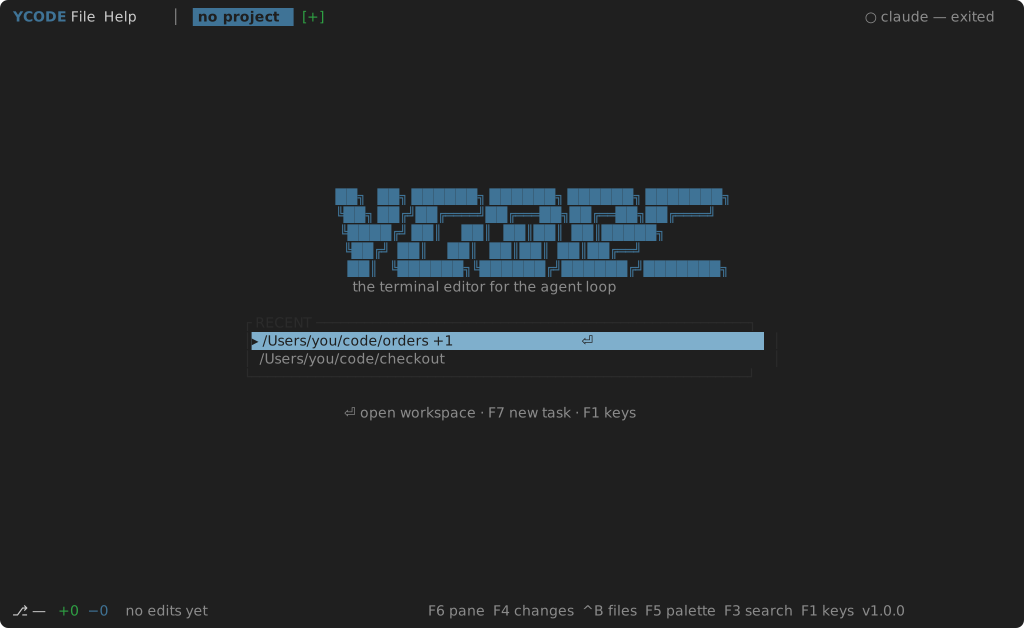
The start page

Launched without a path, Yara Code opens with no project. The editor shows a start page: the name, the folder in play (or "no folder in the project"), and the key bindings actually in effect, grouped — Project, Edit, Panels, More. Because it is built from your settings.json, it never shows a chord you rebound. It is a reference card, not a menu: the keys it lists are the way to do what it names.

Two ways to put a folder in:

  • Open Folder… (Cmd+Shift+O / Ctrl+Shift+O) — switches the project to that folder.
  • Add Folder to Project… (Cmd+Shift+A / Ctrl+Shift+A) — adds one alongside whatever is already open. See Project folders.

In the window these open the system dialog — Finder on macOS, Explorer on Windows. The terminal frontend has no system dialog to call, so it opens a file browser of its own: walks into a folder, back out, Enter picks what the cursor is on, and Tab switches to typing the path instead.

The layout

Both frontends draw the same thing:

  • A top bar with the YCODE label and the File, View and Help menus. On macOS those menus are in the system menu bar instead, where a Mac keeps them, and the window has no strip of its own — Settings and Quit move to the Yara Code menu beside them, as they do in every Mac application.
  • A sidebar on the left with three views — FILES, SEARCH, GIT — switched in its footer or with Cmd+Shift+E / Cmd+Shift+F / Ctrl+Shift+G.
  • The editor with its tab strip, and the find bar when it is open.
  • A terminal panel under the editor (Cmd+J / Ctrl+J).
  • A status bar: the file, whether it is modified, git blame for the line under the cursor, the cursor position, the language and the theme.

Panes are resizable in both: drag the border between the sidebar and the editor, or the one above the terminal.

Getting around

  • Cmd+P is not a thing here — files are opened from the navigator, from search results, or with Open File….
  • F1 shows every binding in effect.
  • The terminal frontend cycles panes with Tab / Shift+Tab and is fully mouse-driven: click to focus, right-click for the context menu, drag rows to move files, drag tabs to reorder them.